Showing posts with label Fat. Show all posts

MY ONE WEEK TRANFORMATION ON AN UNHEALTHY DIET

Many of you already know that over a week ago, I found out I was very sick and I was unable to do my figure competition. I was devastated. I had worked so hard for 3 months. I even took a whole month and really focused on trying to put a little more muscle on my frame {and succeeded} and then 8 weeks before my competition, I went to my cutting phase. I was ready. My diet was clean, on schedule to the T and I was lifting heavy weights 5 days a week. I was a well oiled machine. Yes, I still have some area's on my body that I'm trying to change and mold, and I'm determined that I will get where I want to be soon enough. This process takes time, but I was ready for my competition. Then my competition dreams were squashed by my health. I had so many supporters and so many get well wishes. Thank you to all of you! You helped pull me through my rough week. I had some great advice from many people, "Take care of yourself and your health, there will always be other competitions, but there's only one of you." I really needed to hear that! It's true! So, thank you!

As soon as I found out that there was no way I could compete, I decided to do my own little mission. A test if you will. As a personal trainer, the biggest and most frustrating thing to deal with is my client's diets. I see them work so hard in the gym, they do what I tell them to do, they're focused and driven, yet their biggest complaint is, "why can't I lose weight?" These clients of mine workout 4 to 6 days a week, and their right....they're not losing weight like they should. I have also gone out of my way to show them what they should be eating, how often they should be eating it and how many macro's they should be bringing in each day. Simple right! They have someone telling them how to fix their diet, so why are they still not losing weight?

I'll tell you what it is. It's their diet! They're not listening to me. They think they are listening to me, but they're not. They think they eat healthy, but they don't. They workout every week, but all of that hard work goes out the window the moment they stuff food in their mouths. Diet is crucial! It's 80% of the hard work. Exercise is only 20%.

I am proof of this! Here is proof! Diet is everything! I decided to take an entire week off from eating clean and healthy. I did not worry about my calories, I did not keep track of my food. I ate what I wanted and whenever I wanted. Here are my BEFORE pictures. These pictures were taken 4 to 5 weeks before my 'unhealthy diet test'.





Now, here are my AFTER pictures. This is after eating anything I wanted, not sticking to a schedule, over-eating, and skipping meals. I actually never went out to eat this whole week. The food I ate was strictly from my home, so you can imagine what more of an impact my diet would have been had I been eating out at fast food joints and restaurants all week.


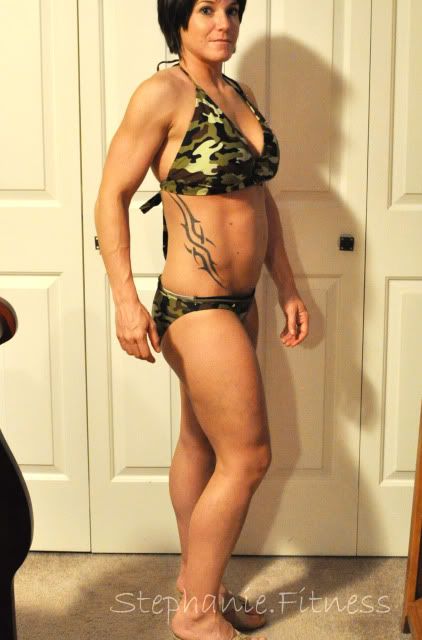


Gross right! I must be pretty brave to post these pictures, but I really want to prove to you HOW IMPORTANT DIET IS. Like I said before, it's crucial.

Here is what I experienced during my "unhealthy diet week":
1. Indigestion
2. Bloating
3. I gained 15 pounds....in 1 week!
4. Heart Burn
5. Difficulty Sleeping
6. No energy or motivation....none at all!
7. Difficulty breathing, I almost felt like my stomach was shoved up into my chest and I kept breathing really heavy. Even my husband kept asking me, "why are you breathing so hard?"
8. Acne
9. My entire mid-section - GONE! I've got love handles!
10.I feel gross....literally plain icky! Even my face gained weight!

Now, here's another shocker: I worked out almost every day that week. I was still doing cardio and strength training galore. So, another thing I would love to point out, is even though you're exercising, if you're not paying attention to calories, carbs, fats, and proteins, you'll never be able to achieve your goals, no matter how hard you work. I had also gone camping the weekend of my test, so many of my foods were camping foods, which I know many of you will be tempted with this summer.

Here is what my diet consisted of for that one week:
Fruits:
-Watermelon
-Oranges
-Grapes
-Apples
-Bananas
-Blueberries

Meat
-Rib-eye Steak
-Lil Smokies w/ BBQ Sauce
-Sausage Links
-Scrambled Eggs w/ cheese
-Chicken Thighs
-1/2 Brat

Junk Food
-Powdered donuts
-Snickers Bar
-Smores
-Cinnamon Yogurt Pretzels
-Oatmeal Cookies
-Trail Mix
-Chips & Salsa
-Popcorn
-Cupcakes

Beverages
-Water
-Sunny D
-Regular Mountain Dew
-Protein Shakes
-Chocolate Milk
-Whiskey
-Coffee w/ Sugar Free Creamer

Veggies
-Broccoli
-Carrots
-Cauliflower
-Tomatoes
-Edamame
-Ceasar Salad w/ Croutons
-Spinach Salad
-Potato Salad

Others
-Honey Bunches of Oats Cereal
-Banana Protein Pancakes
-Grilled Ham and Cheese Sandwich
-Peanut Butter & Honey Sandwich on Whole Wheat Bread
-Light & Fit Yogurts
-Chocolate Chip Protein Cookies
-Hummus
-Peanut Butter
-Quaker Rice Cakes

I didn't measure my food. I just ate it. I didn't count calories. I didn't count carbs or protein. I just ate like most people do for one whole week. I still ate healthy foods too. Lots of it, but of course I through in tons of odd carbs, empty calorie drinks, and yummy junk food into my diet.

I'm guess on average I ate around {each day}:
Calories: 4000-5000
Fat: 200g = 1800 calories
Carbs: 600g = 2400 calories
Protein: 150g = 600 calories


THAT IS WAY TOO MUCH! WAY OVER THE TOP! But do you really know how many calories and macro's you're bringing in a day. Do you keep track of it at all? Here's a question for you, "Is your biggest problem area your belly? Why won't your ab muscles show up?" Here's proof. My belly is a mess, it sticks out and my ab muscles are gone! Just after one week of unhealthy eating. Now do you understand how important CLEAN EATING REALLY IS?

*** Now comes the fun part! How long is it going to take me to fix what I've done to my body? I know it's going to take a lot longer than just a week. Next week, I will do another blog post that's going to focus on my new diet to get me back to the way I was. I will include what my calories are going to be each day, as well as my fats, my carbs, my proteins. I'll even put down my workouts and what my goal is in the end. Wish me luck! I wish you the best of luck too!
Eating Good Fat Is Good For You

Olive oil bottleImage by net_efekt via FlickrFat has taken a bad rap over the years but, it is very essential to your health and well being.  “Eat a low-fat, low-cholesterol diet” has been the mantra for healthy eating for decades now. Touted as a way to lose weight and prevent heart disease and other chronic conditions, millions of people have followed this advice. Seeing a tremendous marketing opportunity, food companies re-engineered thousands of foods to be lower in fat or fat free. The low-fat approach to eating may have made a difference for the occasional individual, but as a nation it has not helped us control our weight or become healthier. In the 1960s, fats and oils supplied Americans with about 45 percent of their calories and about 13 percent of the population was obese and less than 1 percent had type 2 diabetes. Today Americans take in less fat, getting about 33 percent of calories from fats and oils, yet 34 percent of the population is obese and 8 percent has diabetes (mostly type 2).

Your body packages fat and cholesterol into tiny protein-covered particles called lipoprotein in order to get them into your blood stream. Some of these lipoproteins are big and fluffy, and others are small and dense. However, the most important ones to remember for your health and well-being are low-density lipoproteins, high-density lipoproteins, and triglycerides as explained below.

Low-density lipoproteins (LDL) carry cholesterol form your liver to the rest of your body. Your cells latch onto these particles and extract fat and cholesterol from them. When there is too much LDL cholesterol in your blood, these particles can form deposits in the walls of your coronary arties and other arties throughout your body. These deposits, called plaque can cause your arties to narrow and limit blood flow resulting in a heart attack or stroke. Thus LDL cholesterol is called your bad cholesterol.

High-density lipoprotein (HDL) scavenge cholesterol from your bloodstream, from your LDL, and from your artery walls and ferry it back to your liver for disposal. Thus HDL cholesterol is referred to as your good cholesterol.

Triglycerides make up most of the fat that you eat and that travels through your bloodstream. Triglycerides are your body’s main vehicle for transporting fats to your cells and thus, are very important for your good health. However, an excess of triglycerides can be unhealthy.

The type of fat your diet determines to a large extent the amount of total and LDL cholesterol in your bloodstream. Cholesterol in food matters too, but not nearly as much. You can basically break the fats in your diet into three categories; good, bad, and very bad.

Good Fats

Unsaturated fats are called good fats because they can improve blood cholesterol levels, ease inflammation, stabilize heart rhythms, and play a number of other beneficial roles. Unsaturated fats are predominantly found in foods from plants, such as vegetable oils, nuts, and seeds. They are liquid at room temperature.

Further, there are two types of unsaturated fats. First monounsaturated fats which are found in high concentrations in canola, peanut, and olive oils; avocados; nuts such as almonds, hazelnuts, and pecans; and seeds such as pumpkin and sesame seeds. Secondly, polyunsaturated fats which are found in high concentrations in sunflower, corn, soybean, and flaxseed oils, and also in foods such as walnuts, flax seeds and fish.

Research has shown that replacing carbohydrates in your diet with good fats reduces harmful levels of LDL and increases protective HDL in your bloodstream. A randomized trail known as the Optimal Macronutrient Intake Trial for Heart Health showed that replacing a carbohydrate-rich diet with one rich in unsaturated fat, predominantly monounsaturated fats lowers blood pressure, improves lipid levels, and reduces the estimated cardiovascular risk.

Bad Fats

Saturated fats are called bad fats because they increase your total cholesterol level by elevating your harmful LDL. Your body can make all the saturated fat that it needs, so you don’t need to get any in your diet. In the US and other developed countries saturated fats come mainly from meat, seafood, poultry with skin, and whole-milk dairy products. A few plant sources are also high in saturated fats, such as coconuts and coconut oil, palm oil, and palm kernel oil.

As general rule it’s a good idea to keep your intake of saturated fats as low as possible. Saturated fats are a part of many foods, including vegetable oils that are mainly unsaturated fats, so you can’t totally eliminate them from your diet. Red meat and dairy fats are the main sources of saturated fats in most people’s diets, so minimizing them in your diet is the primary way to reduce your intake of saturated fat.

Very Bad Fats

Trans fatty acids, more commonly known as trans fats are made by heating liquid vegetable oils in the presence of hydrogen gas, a process called hydrogenation. Partially hydrogenating vegetable oils make them more stable and less likely to spoil. It also converts the oil into a solid which makes transportation easier. Partially hydrogenated oils can also withstand repeated heating without breaking down, which makes them ideal for frying fast foods. This is why partially hydrogenated oils have been a mainstay of restaurants and the food industry.

Trans fats are worse for cholesterol levels than saturated fats because they raise bad LDL and lower good HDL. They also increase inflammation, an over-activity of the immune system that has been implicated in heart disease, stroke, diabetes, and other chronic conditions. Even small amounts of trans fats in diet can have harmful health effects. For every extra 2 percent of calories from trans fat daily (the amount in a medium order of fast food French fries) the risk of coronary heart disease increases by 23 percent. It is estimated that eliminating trans fats from the US food supply would prevent between 6 and 19 percent of heart attacks and related deaths (more than 200,000) each year.
Enhanced by Zemanta

ABDOMINAL FAT

We are starting a new trend at Idaho Falls Gold's Gym next week. We're going to be doing a newsletter every month, to help all of your clients and gym members know what's going on with Gold's, as well as tidbits on fitness and nutrition. They asked me to pick a body part and write a small little "fact" that I would like to talk about. I chose to talk about abdominal fat.


ABDOMINAL FAT


“No matter how developed your ab muscles are, they won’t be visible if they’re covered in a layer of fat.”

There are 2 different types of abdominal fat.
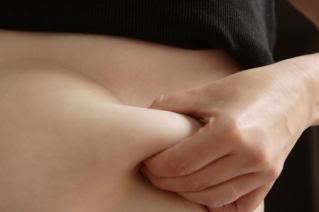
1. Subcutaneous Fat – Found OUTSIDE of the muscle wall {the pinchable stuff}.
2. Visceral Fat – Found UNDER the muscles and surrounds all of our vital organs.

Visceral fat is the hardest to burn off. It is also the most dangerous kind of fat. Having excess fat at the waist has been linked to several disorders such as high blood pressure, diabetes, and high cholesterol. The best way to get rid of both subcutaneous fat and visceral fat is diet and cardio. You could do a million crunches, but until you clean up your diet and do a little extra cardio, your ab muscles will never “pop out.”

LinkWithin

Related Posts Plugin for WordPress, Blogger...